
Hot Mix Asphalt Calculator
Hot Mix Asphalt Calculator: How to Estimate Tonnage for Any Paving Project
Whether you’re paving a residential driveway, a parking lot, a road section, or a commercial surface, getting your hot mix asphalt tonnage right before you order is essential. Order too little and the paving crew can’t finish the job in a single pour — which creates visible cold joints and compromises the structural integrity of the finished surface. Order too much and you’re paying for material that hardens in the truck drum or sits wasted on site.
A hot mix asphalt calculator takes the guesswork out of the equation. This guide explains how the calculation works, what density values to use for different HMA mix types, real coverage and cost tables, and the critical practical details every contractor and property owner should know before calling a quarry or asphalt plant.
What Is Hot Mix Asphalt?
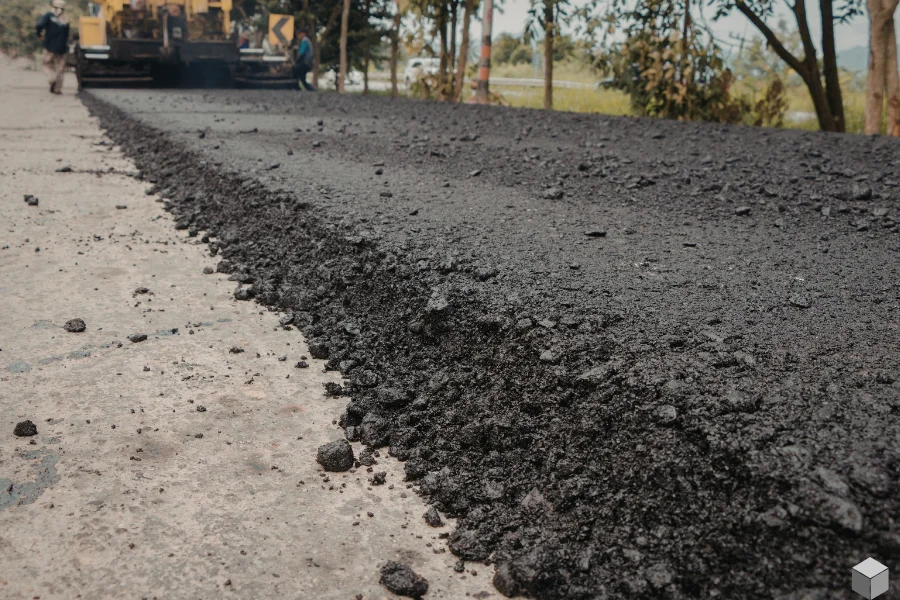
Hot mix asphalt (HMA) — also called blacktop, hotmix, or hot plant mix — is a combination of aggregates (crushed stone, gravel, sand) bound together by asphalt cement (bitumen) and mixed at high temperatures, typically between 300°F and 350°F (149°C–177°C). The elevated temperature keeps the mixture workable during transport and placement, then allows it to cool and harden into a durable, flexible pavement surface.
HMA is the dominant paving material for roads, driveways, parking lots, and airport runways in the United States and around the world. It is produced at asphalt plants operated by quarry and construction materials companies, then transported by insulated dump trucks to the paving site.
What Is the Difference Between Asphalt and Hot Mix?
The terms “asphalt” and “hot mix asphalt” are often used interchangeably, but technically:
- Asphalt (or asphalt cement / bitumen) refers to the dark, viscous petroleum-based binder that holds the aggregate together
- Hot mix asphalt (HMA) refers to the finished construction material — the combination of asphalt cement and aggregate produced at a plant
When a contractor says they’re ordering “asphalt” for a driveway, they mean hot mix asphalt. The asphalt itself is just one ingredient; the mixed product is HMA.
The Hot Mix Asphalt Calculator Formula
The hot mix asphalt calculator formula converts your project dimensions into tons — the unit in which HMA is always sold.
Step 1 — Calculate volume in cubic feet Length (ft) × Width (ft) × Thickness (ft) = Cubic Feet
Step 2 — Convert to tons Cubic Feet × Density (lbs/ft³) ÷ 2,000 = Tons
Quick Shortcut Formula
For standard dense-graded HMA at 145 lbs/ft³ (the most common density for driveways and parking lots):
(Square Feet × Thickness in Inches) ÷ 166 = Tons
Example: A 20 ft × 40 ft driveway at 2.5 inches thick: (20 × 40 × 2.5) ÷ 166 = 2,000 ÷ 166 = 12.05 tons — order 13 tons with waste
HMA Density: What Value to Use
The density of hot mix asphalt — measured in pounds per cubic foot (lbs/ft³) or pounds per cubic yard (lbs/yd³) — is the conversion factor that turns volume into weight. Density varies by mix type, aggregate gradation, and asphalt content.
HMA Density by Mix Type
| Mix Type | Typical Density (lbs/ft³) | Typical Density (lbs/yd³) | Tons per Cubic Yard |
|---|---|---|---|
| Dense-graded HMA (standard) | 140–148 lbs/ft³ | 3,780–3,996 lbs | 1.89–2.0 tons |
| Stone Matrix Asphalt (SMA) | 145–152 lbs/ft³ | 3,915–4,104 lbs | 1.96–2.05 tons |
| Open-graded friction course (OGFC) | 115–130 lbs/ft³ | 3,105–3,510 lbs | 1.55–1.76 tons |
| Warm mix asphalt (WMA) | 138–148 lbs/ft³ | 3,726–3,996 lbs | 1.86–2.0 tons |
| Cold mix / patching mix | 110–130 lbs/ft³ | 2,970–3,510 lbs | 1.49–1.76 tons |
| Recycled asphalt (RAP) | 130–140 lbs/ft³ | 3,510–3,780 lbs | 1.76–1.89 tons |
Standard planning value: Use 145 lbs/ft³ (lbs./cubic foot) as the default density when calculating HMA tonnage for driveways, parking lots, and road surfaces. This is the value used by H&K Group, Sunrock, Vulcan Materials, and most major asphalt producers in their online calculators.
HMA Tonnage Coverage Table
Tons of Hot Mix Asphalt per Square Foot by Thickness
| Thickness | Tons per 100 sq ft | Tons per 500 sq ft | Tons per 1,000 sq ft |
|---|---|---|---|
| 1 inch | 0.60 tons | 3.02 tons | 6.04 tons |
| 1.5 inches | 0.91 tons | 4.53 tons | 9.06 tons |
| 2 inches | 1.21 tons | 6.04 tons | 12.08 tons |
| 2.5 inches | 1.51 tons | 7.55 tons | 15.09 tons |
| 3 inches | 1.81 tons | 9.06 tons | 18.11 tons |
| 4 inches | 2.42 tons | 12.08 tons | 24.15 tons |
| 5 inches | 3.02 tons | 15.09 tons | 30.18 tons |
| 6 inches | 3.62 tons | 18.11 tons | 36.22 tons |
Based on 145 lbs/ft³ standard dense-graded HMA. Add 5–10% for waste and edge trimming.
Quick Project Reference: Tons Needed by Driveway Size
| Driveway Dimensions | 2″ thick | 3″ thick | 4″ thick |
|---|---|---|---|
| 10 × 20 ft | 2.4 tons | 3.6 tons | 4.8 tons |
| 12 × 40 ft | 5.8 tons | 8.7 tons | 11.6 tons |
| 16 × 40 ft | 7.7 tons | 11.6 tons | 15.5 tons |
| 20 × 20 ft | 4.8 tons | 7.3 tons | 9.7 tons |
| 20 × 40 ft | 9.7 tons | 14.5 tons | 19.4 tons |
| 24 × 50 ft | 14.5 tons | 21.8 tons | 29.0 tons |
| 50 × 100 ft (parking lot) | 36.2 tons | 54.3 tons | 72.4 tons |
HMA Mix Types and Their Applications
Not all hot mix asphalt is the same. Different projects require different mix designs depending on traffic loads, climate, drainage requirements, and surface function.
Common HMA Mix Types
| Mix Type | Gradation | Best For | Notes |
|---|---|---|---|
| SP (Superpave) dense-graded | Continuous, well-graded | Roads, driveways, parking lots | Most common residential/commercial mix |
| SMA (Stone Matrix Asphalt) | Gap-graded, stone skeleton | High-traffic roads, intersections | More expensive; superior rutting resistance |
| OGFC (Open-Graded Friction Course) | Coarse, porous | Highway surface courses | Reduces splash/spray; improved skid resistance |
| Warm Mix Asphalt (WMA) | Similar to HMA | Extended paving season; green building | Produced at lower temps (250–275°F) |
| Cold Mix | Unheated, emulsified | Patching, temporary repairs | Lower durability; not for full paving |
| RAP (Reclaimed Asphalt Pavement) | Recycled from milled pavement | Base or binder courses | Cost-effective; sustainable |
What Is the Difference Between HMA and CMA?
| Factor | HMA (Hot Mix Asphalt) | CMA (Cold Mix Asphalt) |
|---|---|---|
| Production temperature | 300–350°F (149–177°C) | Ambient / room temperature |
| Asphalt binder | Hot asphalt cement | Emulsified or cut-back asphalt |
| Workability window | ~90 minutes (temperature-dependent) | Days to weeks |
| Compaction | Requires mechanical compaction while hot | Easier to compact; less critical timing |
| Durability | High; 15–25+ year surface life | Moderate; 2–5 years typical |
| Applications | Permanent paving: roads, driveways, lots | Patching, temporary repairs, remote locations |
| Cost per ton | Higher | Lower |
| Season | Best in warm seasons; minimum 50°F air temp | Can be applied in any season |
HMA is the premium, permanent choice. CMA is the right tool for patch repairs, emergency fixes, and situations where the logistics of HMA delivery aren’t practical.
How Much Is 1 Ton of Hot Asphalt?
The cost of hot mix asphalt per ton fluctuates with crude oil prices, as bitumen is a petroleum derivative. These are general market benchmarks.
HMA Cost Per Ton (US Market)
| Material | Average Cost per Ton (Plant Gate) | Delivered Cost per Ton |
|---|---|---|
| Dense-graded HMA (standard) | $80 – $140 per ton | $100 – $175 per ton |
| SMA (stone matrix) | $120 – $180 per ton | $140 – $220 per ton |
| WMA (warm mix) | $85 – $145 per ton | $105 – $180 per ton |
| Patching / cold mix | $60 – $100 per ton | $80 – $120 per ton |
Prices at major producers like Vulcan Materials, Martin Marietta, Pike Industries, and Tilcon vary by region. Pennsylvania/Mid-Atlantic plants (H&K Group) and Southeast plants (Sunrock) follow similar regional pricing. Always get a current quote — HMA prices track crude oil and can change monthly.
How Much Would a 20×20 Asphalt Driveway Cost?
A 20×20 foot driveway (400 square feet) is a common small driveway or parking pad size.
Material and Installation Cost Breakdown
Step 1 — Calculate tonnage:
- At 2 inches thick: (400 × 2) ÷ 166 = 4.82 tons → order 5.5 tons with waste
- At 3 inches thick: (400 × 3) ÷ 166 = 7.23 tons → order 8 tons with waste
Step 2 — Material cost (at $130/ton delivered):
- 2″ thick: 5.5 tons × $130 = ~$715 in material
- 3″ thick: 8 tons × $130 = ~$1,040 in material
Full installed cost (including grading, base preparation, and paving labor):
| Item | Estimated Cost |
|---|---|
| Subbase gravel (4″ compacted, ~5 tons) | $150 – $300 |
| HMA material (5.5 tons @ 2″) | $550 – $825 |
| Labor (grading, paving, compaction) | $400 – $800 |
| Total (2″ overlay on existing base) | $1,100 – $1,925 |
| Total (new installation with base) | $1,600 – $2,800 |
Professional paving quotes for a 20×20 driveway typically run $3 – $7 per square foot installed, or $1,200 – $2,800 total for a standard residential job including base preparation, HMA, compaction, and edging.
How Long Will Hot Mix Asphalt Stay Hot?
This is one of the most time-sensitive logistics questions in any paving project. Once HMA leaves the plant, the clock is running.
HMA Temperature and Time Guidelines
| Stage | Temperature Range | Available Time |
|---|---|---|
| At plant / loading | 300–350°F (149–177°C) | N/A |
| In truck drum (insulated) | Drops ~5–10°F per hour | 90 minutes recommended max |
| During paving (workable) | 250–300°F (121–149°C) | Must be placed before temp drops |
| Minimum compaction temp | 185°F (85°C) | Rolling must be completed above this |
| Open to traffic | ~140–160°F (60–71°C) | Typically 30–60 minutes after compaction |
| Full cure / strength | Ambient temperature | 24–48 hours for full traffic capacity |
The 90-minute rule (ASTM C94 / industry standard) applies: HMA should be discharged and placed within 90 minutes of production to maintain adequate workability and compaction quality. In cold weather (below 50°F), this window shrinks dramatically — heat loss from the mix is much faster in cold conditions.
Key practical implications:
- Coordinate truck timing so no truck sits idle more than 30–45 minutes waiting to unload
- In cold weather, paving should not begin unless air temperature is above 50°F and rising
- Never add water to HMA to restore workability — it destroys the mix
Hot Mix Asphalt Thickness Guide
Choosing the right compacted thickness is as important as calculating the right tonnage.
Recommended HMA Thickness by Application
| Application | Compacted Thickness | Notes |
|---|---|---|
| Residential driveway (cars only) | 2 – 3 inches | Over 4–6″ compacted base |
| Driveway (trucks, RVs, heavy loads) | 3 – 4 inches | Minimum 4″ base; consider 2 lifts |
| Parking lot (light vehicles) | 3 inches | Standard for commercial |
| Parking lot (heavy trucks) | 4 – 5 inches | 2-lift construction recommended |
| Municipal road (base course) | 3 – 4 inches | Binder course; topped with surface |
| Municipal road (surface course) | 1.5 – 2.5 inches | Applied over binder |
| Highway | 4 – 8 inches total | Multi-layer construction |
| Overlay on existing asphalt | 1.5 – 2 inches | Mill-and-fill or thin overlay |
For lifts over 3 inches, HMA should be placed in two separate compacted layers (lifts). A single lift thicker than 3 inches doesn’t compact evenly — the bottom cools faster than the top, leaving inconsistent density.
Waste Factor and Ordering Tips
Add 5–10% to your calculated tonnage before placing your order. Reasons:
- Edge trimming wastes some material at the perimeter
- Uneven subbase results in slightly variable thickness
- Overlap at joints and transitions requires extra material
- Trucks may not be able to deliver the exact calculated tonnage
For small projects under 5 tons, add 10%. For large parking lots over 50 tons, 5% is usually sufficient.
Most HMA plants have a minimum order quantity — typically 2–5 tons. For very small projects, confirm minimum order requirements before calculating, as you may need to order more than your calculation shows.
Frequently Asked Questions
What Is Hot Mix Asphalt?
Hot mix asphalt (HMA) is a construction paving material made from approximately 94–95% aggregates (crushed stone, gravel, and sand) and 5–6% asphalt cement binder, mixed together at temperatures of 300–350°F. The heat makes the mixture workable for transport and placement. Once spread and compacted at the job site, it cools to form a strong, flexible, durable pavement surface. HMA is produced at asphalt plants by quarry and construction materials companies, then transported to job sites by insulated dump trucks.
What Is the Difference Between HMA and CMA?
HMA (hot mix asphalt) is produced and placed at high temperatures (300–350°F) and creates a permanent, durable surface with a lifespan of 15–25+ years. CMA (cold mix asphalt) is produced without heat using emulsified binder and is used primarily for patching, temporary repairs, and remote locations where HMA logistics aren’t practical. CMA typically lasts 2–5 years. HMA requires mechanical compaction in a narrow temperature window; CMA is more forgiving.
How Much Is 1 Ton of Hot Asphalt?
Hot mix asphalt typically costs $80–$140 per ton at the plant gate and $100–$175 per ton delivered to your site, depending on your region, current oil prices, and the specific mix design ordered. SMA and specialty mixes run higher. Pricing from major producers like Vulcan, Martin Marietta, Pike Industries, Tilcon, and regional quarry-based companies follows these general benchmarks. Always request a current price — HMA costs fluctuate with crude oil and can change significantly within a single paving season.
What Is the Difference Between Asphalt and Hot Mix?
“Asphalt” technically refers to the bituminous binder (asphalt cement) derived from petroleum refining. “Hot mix asphalt” or “blacktop” refers to the complete paving material — the combination of asphalt binder and aggregate produced at a mixing plant. In everyday usage, when a contractor or property owner says “asphalt,” they mean hot mix asphalt — the finished material used to pave driveways and roads. The distinction matters in technical contexts but not in everyday ordering.
How Long Will Hot Mix Asphalt Stay Hot?
HMA remains workable for approximately 90 minutes after leaving the plant under normal conditions (air temp above 60°F, low wind). The industry standard — consistent with ASTM and NAPA guidance — is to discharge and compact the mix within 90 minutes of production. In cold weather (below 50°F air temp), this window shrinks significantly. The minimum compaction temperature is approximately 185°F; rolling must be completed before the mix cools below this threshold.
How Much Would a 20×20 Asphalt Driveway Cost?
A 20×20 foot (400 sq ft) asphalt driveway requires approximately 5–8 tons of hot mix asphalt depending on compacted thickness (2–3 inches). Material cost alone runs approximately $650–$1,100. Fully installed — including subbase preparation, paving, and compaction — expect to pay $1,200–$2,800 for a standard residential installation. Per-square-foot installed pricing ranges from $3–$7, with the actual cost depending heavily on site conditions, base preparation needed, and local labor rates.
Quick Reference Summary
| Calculation | Formula / Value |
|---|---|
| Tons from dimensions | (L × W × Thickness in ft × 145 lbs/ft³) ÷ 2,000 |
| Quick formula (sq ft + inches) | (Sq ft × thickness in inches) ÷ 166 |
| Standard HMA density | 145 lbs/ft³ (2,320 kg/m³) |
| Tons per cubic yard (standard) | ~1.96 tons |
| Waste factor | Add 5–10% |
| Min paving temp | 50°F air temperature |
| 90-minute rule | Place and compact within 90 min of plant |
| Residential driveway thickness | 2–3 inches compacted |
| Heavy-duty / truck thickness | 3–4 inches compacted |
| 20×20 ft driveway (2″) | ~4.8 tons material |
Use the free hot mix asphalt calculator above to get your tonnage instantly — enter your project dimensions and select your mix type density to get an accurate ton estimate with waste factor included.