
Crushed Stone Calculator
Crushed Stone Calculator: How to Calculate Tons and Yards for Any Project
Whether you’re building a driveway, laying a patio base, installing drainage, or spreading stone dust under a shed, knowing exactly how much crushed stone you need before ordering saves you from two equally frustrating outcomes: running short mid-project or paying for material that sits in a pile for years.
A crushed stone calculator gives you the answer in seconds — but understanding the formula, the density differences between stone types, and what size stone to choose for your specific application makes you a smarter buyer and a better builder.
What Is Crushed Stone?
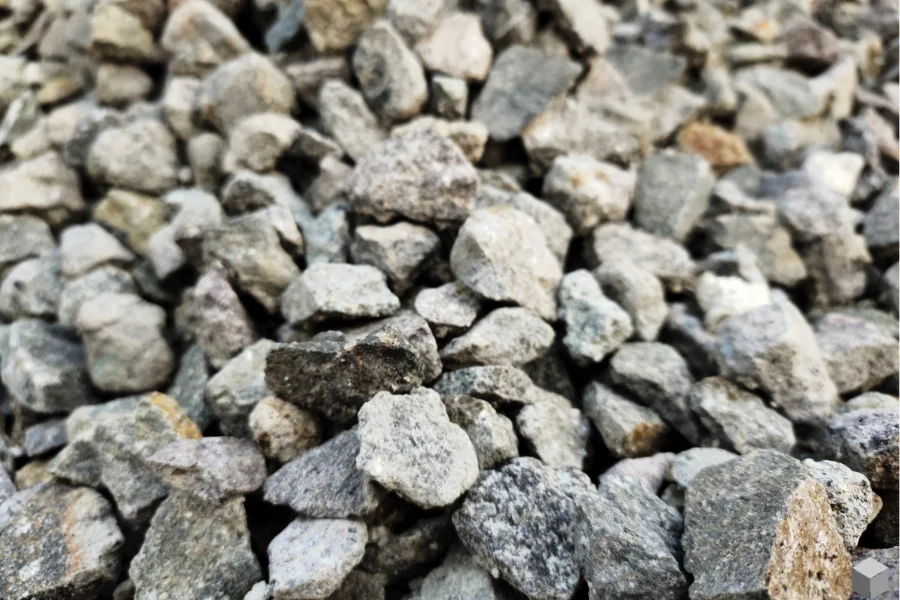
Crushed stone is a construction aggregate produced by mining rock from quarries and mechanically crushing it to specific sizes and gradations. Unlike gravel — which is naturally rounded from water erosion — crushed stone has sharp, angular edges created by the crushing process. Those angular edges are what make crushed stone lock together under compaction, giving it superior load-bearing and drainage properties.
The most common source rocks for crushed stone include limestone, granite, trap rock, dolomite, and sandstone. Each produces aggregate with slightly different density, hardness, and drainage characteristics that affect both which applications it suits and how many tons you need per cubic yard.
The Crushed Stone Formula
Calculating how much crushed stone you need follows a straightforward three-step process. All measurements must be converted to feet before the calculation.
Step 1 — Calculate Volume in Cubic Feet
Length (ft) × Width (ft) × Depth (ft) = Cubic Feet
Step 2 — Convert to Cubic Yards
Cubic Feet ÷ 27 = Cubic Yards
Step 3 — Convert to Tons
Cubic Yards × Density Factor = Tons
Step 4 — Add Waste and Compaction Overage
Tons × 1.10 = Final Order Quantity (adds 10% standard overage)
The Quick Shortcut Formula
If you know your area in square feet and your depth in inches:
(Square Feet × Depth in Inches) ÷ 324 = Cubic Yards
Then multiply cubic yards by 1.5 (standard density factor) to get approximate tons.
Crushed Stone Density: Why It Matters
The single biggest variable in converting from cubic yards to tons is the density of the stone you’re using. Suppliers price crushed stone by the ton, so using the correct density figure prevents you from ordering the wrong amount.
Density by Stone Type
| Stone Type | Density (lbs/ft³) | Tons per Cubic Yard |
|---|---|---|
| Limestone, crushed | 135–145 lbs/ft³ | 1.82–1.96 tons/yd³ |
| Granite, crushed | 145–155 lbs/ft³ | 1.96–2.09 tons/yd³ |
| Trap rock, crushed | 148–160 lbs/ft³ | 2.0–2.16 tons/yd³ |
| Dolomite, crushed | 135–145 lbs/ft³ | 1.82–1.96 tons/yd³ |
| Sandstone, crushed | 120–135 lbs/ft³ | 1.62–1.82 tons/yd³ |
| Crushed concrete (recycled) | 120–130 lbs/ft³ | 1.62–1.76 tons/yd³ |
| Stone dust / crusher fines | 100–115 lbs/ft³ | 1.35–1.55 tons/yd³ |
| Crusher run (dense-graded) | 128–145 lbs/ft³ | 1.73–1.96 tons/yd³ |
| 3/4 inch crushed stone | 135–145 lbs/ft³ | 1.82–1.96 tons/yd³ |
| Crushed gravel | 100–120 lbs/ft³ | 1.35–1.62 tons/yd³ |
| Crushed granite | 145–155 lbs/ft³ | 1.96–2.09 tons/yd³ |
| Crushed shell | 65–75 lbs/ft³ | 0.88–1.01 tons/yd³ |
For general estimating purposes, the widely used approximation of 1.5 tons per cubic yard works reasonably well for most mid-density crushed stone like limestone and standard 3/4-inch aggregate. However, when ordering dense trap rock or granite, use 1.9–2.0 tons per cubic yard to avoid coming up short.
Crushed Stone Size Guide: Which Stone for Which Job?
Stone sizing is standardized by ASTM and AASHTO designation numbers. Understanding the difference between a #57 stone and a 2B stone — or between crusher run and 3/4-inch clean stone — is essential for ordering the right material.
Complete Stone Size Reference
| Stone Size / Name | Approximate Size | Common Uses |
|---|---|---|
| Stone dust / crusher fines | <1/4 inch | Paver base, pathway filler, compacting base, tennis courts |
| #10 / screenings | 1/8 – 3/8 inch | Pipe bedding, gap fill, leveling base |
| #9 stone | 3/8 inch | Exposed aggregate, decorative, walkway top dressing |
| 1/2 inch crushed stone | 1/2 inch | Asphalt mix, concrete mix, filtration, drainage |
| 3/4 inch crushed stone (#57) | 3/4 inch | Driveways, drainage, pipe bedding, concrete mix, French drains |
| 2B stone / #67 stone | 3/4 – 1 inch | Road base, driveway base, drainage, slab sub-base |
| #2 stone / 1.5 inch | 1.5 – 2 inches | Drainage fields, drainage trenches, dry wells |
| 3 inch stone | 2.5 – 3.5 inches | Riprap, erosion control, culvert ends, drainage outfalls |
| Crusher run (CR6, dense grade) | 0 – 3/4 inch (mixed) | Driveways, road base, compacted sub-base, parking areas |
| Crush and run | 0 – 1.5 inch (mixed) | Driveway base, road base, fill compaction |
| Modified stone | 0 – 2 inch (mixed) | Sub-base for heavy traffic areas |
| Clean stone (open graded) | Uniform size | Drainage, French drains, septic systems |
| 3/4 clear stone | 3/4 inch, no fines | High-drainage applications, French drains |
| Crushed limestone | Various | Road base, concrete aggregate, agricultural lime |
| Crushed granite | Various | High-strength driveways, decorative, base material |
| Crushed concrete | Various | Recycled base material, fill, road base |
| Slate chips | 3/4 – 1.5 inch | Decorative paths, garden beds, landscape |
3/4 Inch Crushed Stone: The Most Common Choice
The 3/4 inch crushed stone — sold as #57 stone in most markets — is the most versatile and widely purchased aggregate size for residential and commercial projects. It is angular enough to compact well under load but permeable enough to drain freely, making it suitable for driveways, drainage applications, and slab bases simultaneously.
Crusher Run vs. 3/4 Clean Stone: Key Differences
| Factor | Crusher Run (CR6) | 3/4 Inch Clean Stone |
|---|---|---|
| Gradation | Mixed fines to 3/4″ | Uniform 3/4″ (no fines) |
| Compaction | Excellent — fines fill voids | Poor — open-graded, voids remain |
| Drainage | Poor — fines block water flow | Excellent — drains freely |
| Stability under load | High once compacted | Moderate (rolls under load) |
| Best use | Driveways, road base, sub-base | French drains, pipe bedding |
| Cost | Typically less expensive | Typically more expensive |
How Much Crushed Stone Do I Need: Complete Coverage Tables
Coverage per Cubic Yard by Depth
| Depth | Coverage per Cubic Yard |
|---|---|
| 1 inch | 324 sq ft |
| 2 inches | 162 sq ft |
| 3 inches | 108 sq ft |
| 4 inches | 81 sq ft |
| 6 inches | 54 sq ft |
| 8 inches | 40.5 sq ft |
| 12 inches | 27 sq ft |
How Much Does 1 Yard of Crushed Rock Cover?
One cubic yard of crushed stone covers different areas depending on depth:
- Spread at 2 inches deep: covers 162 square feet (about a 13 × 12.5 ft area)
- Spread at 3 inches deep: covers 108 square feet (roughly a 10 × 10 ft area with a bit extra)
- Spread at 4 inches deep: covers 81 square feet (a 9 × 9 ft area)
Coverage per Ton by Depth (Standard Limestone/Granite ~1.5 tons/yd³)
| Depth | Coverage per Ton |
|---|---|
| 1 inch | 216 sq ft |
| 2 inches | 108 sq ft |
| 3 inches | 72 sq ft |
| 4 inches | 54 sq ft |
| 6 inches | 36 sq ft |
How Much Does 1 Ton of Crushed Gravel Cover?
At a standard density of approximately 1.5 tons per cubic yard, one ton covers about 108 square feet at 2 inches deep, 72 square feet at 3 inches deep, and 54 square feet at 4 inches deep. For denser stone like granite (1.9 tons/yd³), coverage per ton is slightly higher because the material is heavier per unit of volume.
Square Feet to Tons Needed (Quick Lookup Table)
| Area (sq ft) | 2″ deep | 3″ deep | 4″ deep | 6″ deep |
|---|---|---|---|---|
| 100 sq ft | 0.93 tons | 1.39 tons | 1.85 tons | 2.78 tons |
| 250 sq ft | 2.31 tons | 3.47 tons | 4.63 tons | 6.94 tons |
| 500 sq ft | 4.63 tons | 6.94 tons | 9.26 tons | 13.89 tons |
| 750 sq ft | 6.94 tons | 10.42 tons | 13.89 tons | 20.83 tons |
| 1,000 sq ft | 9.26 tons | 13.89 tons | 18.52 tons | 27.78 tons |
| 1,500 sq ft | 13.89 tons | 20.83 tons | 27.78 tons | 41.67 tons |
| 2,000 sq ft | 18.52 tons | 27.78 tons | 37.04 tons | 55.56 tons |
Driveway Stone Calculator: How Many Tons for Your Driveway?
Driveways are the most common application for crushed stone. The standard recommended depth is 4 inches of compacted stone for light vehicle traffic, or 6 inches for heavier vehicles and high-use driveways.
Stone Calculator for Driveway: By Dimensions
| Driveway Size | 4 Inches Deep | 6 Inches Deep |
|---|---|---|
| 10 × 50 ft (small, 1 car) | 6.2 tons | 9.3 tons |
| 10 × 100 ft | 12.4 tons | 18.5 tons |
| 12 × 100 ft | 14.8 tons | 22.2 tons |
| 14 × 200 ft | 34.6 tons | 51.9 tons |
| 16 × 100 ft | 19.8 tons | 29.6 tons |
| 20 × 100 ft | 24.7 tons | 37.0 tons |
| 20 × 200 ft | 49.4 tons | 74.1 tons |
How Many Tons of Gravel for a 100 Foot Driveway?
For a standard 12-foot-wide driveway that is 100 feet long at 4 inches deep:
- 12 × 100 × 0.333 ft = 400 cubic feet
- 400 ÷ 27 = 14.8 cubic yards
- 14.8 × 1.5 = 22.2 tons (using standard limestone density)
- With 10% waste: 24.4 tons — order 25 tons
For a wider 14-foot driveway at 100 feet long and 4 inches deep, plan for approximately 27–28 tons including waste.
Worked Calculation Examples
Example 1: Patio Base (3/4 Inch Stone Under Pavers)
A 20 ft × 15 ft patio with 4 inches of 3/4 clean stone as a sub-base.
- Depth in feet: 4 ÷ 12 = 0.333 ft
- Volume: 20 × 15 × 0.333 = 100 cubic feet
- Cubic yards: 100 ÷ 27 = 3.70 cu yd
- Tons (@ 1.5): 3.70 × 1.5 = 5.56 tons
- Add 10%: 6.1 tons — order 6.5 tons
Example 2: Crusher Run Driveway Base
A 12 ft × 80 ft driveway base with 6 inches of crusher run (CR6).
- Volume: 12 × 80 × 0.5 = 480 cubic feet
- Cubic yards: 480 ÷ 27 = 17.78 cu yd
- Tons (@ 1.75 for dense-grade): 17.78 × 1.75 = 31.1 tons
- Add 10%: 34.2 tons — order 35 tons
Example 3: French Drain (3/4 Clear Stone)
A 50-foot French drain trench, 18 inches wide × 24 inches deep.
- Convert to feet: 1.5 ft wide × 2 ft deep
- Volume: 1.5 × 2 × 50 = 150 cubic feet
- Cubic yards: 150 ÷ 27 = 5.56 cu yd
- Tons (@ 1.5): 5.56 × 1.5 = 8.33 tons
- Add 10%: 9.2 tons — order 9.5 or 10 tons
Example 4: Stone Dust Paver Base
A 12 ft × 16 ft area with 1 inch of stone dust beneath pavers.
- Volume: 12 × 16 × 0.0833 = 16 cubic feet
- Cubic yards: 16 ÷ 27 = 0.59 cu yd
- Tons (@ 1.4 for stone dust): 0.59 × 1.4 = 0.83 tons
- Add 10%: 0.91 tons — order 1 ton
Recommended Depths by Application
Getting the depth right is as important as getting the tonnage right. Too shallow and the base fails. Too deep and you’re wasting money.
Crushed Stone Depth Guide
| Application | Stone Type | Recommended Depth |
|---|---|---|
| Residential driveway (cars only) | Crusher run or #57 | 4 inches compacted |
| Residential driveway (heavy vehicles) | Crusher run base + #57 top | 6–8 inches total |
| Commercial parking area | Crusher run or modified | 6–8 inches |
| Patio sub-base | 3/4 clean or #57 | 4 inches |
| Walkway / garden path | Stone dust or #9 | 2–3 inches |
| French drain fill | 3/4 clear or #57 | Fill full trench depth |
| Pipe bedding | #57 or pea gravel | 6 inches below pipe |
| Slab sub-base (concrete/asphalt) | Crusher run or #21A | 4–6 inches compacted |
| Shed base | 3/4 clean or crusher run | 4–6 inches |
| Septic system drainage bed | #57 or #2 stone | 12 inches minimum |
| Horse paddock surface | 3/4 crushed limestone | 4–6 inches |
| Retaining wall backfill | 3/4 clean stone | Full height of wall |
| Lawn drainage improvement | #57 stone in trenches | 12–18 inches deep |
Crushed Stone Cost: How Expensive Is It?
Stone prices vary significantly by region, stone type, and whether you’re picking up or having it delivered.
Average Crushed Stone Cost per Ton
| Stone Type | Cost per Ton (Pickup) | Cost per Ton (Delivered) |
|---|---|---|
| Crushed limestone | $10 – $20 | $25 – $45 |
| Crusher run / CR6 | $10 – $18 | $22 – $40 |
| 3/4 inch #57 stone | $15 – $25 | $28 – $50 |
| Crushed granite | $20 – $35 | $35 – $60 |
| Trap rock | $25 – $40 | $40 – $70 |
| Stone dust / crusher fines | $8 – $18 | $20 – $38 |
| Crushed concrete (recycled) | $6 – $14 | $18 – $30 |
| Crushed gravel | $10 – $20 | $22 – $40 |
| Crushed shell | $15 – $30 | $30 – $55 |
| Slate chips | $25 – $50 | $40 – $75 |
Cost per Project Size
| Project | Stone Type | Tons Needed | Estimated Material Cost |
|---|---|---|---|
| Small garden path (100 sq ft, 3″) | Stone dust | 1.4 tons | $12 – $28 |
| Patio base (300 sq ft, 4″) | #57 stone | 5.6 tons | $84 – $140 |
| Standard driveway (800 sq ft, 4″) | Crusher run | 14.8 tons | $148 – $370 |
| Long driveway (100 ft × 14 ft, 6″) | Crusher run | 32.5 tons | $325 – $813 |
| French drain (50 ft trench) | 3/4 clear | 9.2 tons | $138 – $230 |
Pricing factors that affect your total cost:
- Distance from the quarry to your site (stone is heavy — transportation is the biggest cost variable)
- Season: spring and summer demand increases prices
- Order size: full truckload quantities are almost always cheaper per ton
- Stone processing level: washed and screened stone costs more than raw crush
- Regional availability of each rock type
Cubic Yards to Tons: Conversion Reference Table
Many suppliers quote prices in tons, but you may be working in cubic yards from your calculator. Here’s how to convert for the most common crushed stone materials.
| Material | Tons per Cubic Yard |
|---|---|
| Limestone, crushed | 1.82 – 1.96 |
| Granite, crushed | 1.96 – 2.09 |
| Trap rock | 2.00 – 2.16 |
| #57 stone (typical) | 1.5 (standard estimate) |
| Crusher run / dense grade | 1.73 – 1.96 |
| Stone dust | 1.35 – 1.55 |
| Crushed concrete | 1.62 – 1.76 |
| Pea gravel | 1.35 – 1.50 |
| Crushed shell | 0.88 – 1.01 |
Crusher Run Calculator: Special Considerations
Crusher run — also called crush and run, CR6, dense-graded aggregate (DGA), or road crush — deserves its own section because it behaves differently from clean, open-graded stone.
Crusher run contains a full gradation of particles from fines (stone dust) all the way up to 3/4-inch or larger pieces. Those fines fill the voids between larger particles, giving crusher run its characteristic ability to compact to an extremely solid, stable surface. This is why it’s the preferred material for driveways, road bases, and any surface that needs to carry vehicle loads.
How Much Crush and Run Do I Need?
Use the same formula as standard crushed stone, but apply a density of 1.75–1.9 tons per cubic yard rather than 1.5. Crusher run is denser than clean stone because its gradation packs tightly with no air voids.
Example: A 60 ft × 12 ft driveway at 4 inches deep.
- Volume: 60 × 12 × 0.333 = 240 cubic feet
- Cubic yards: 240 ÷ 27 = 8.89 cu yd
- Tons (@ 1.8): 8.89 × 1.8 = 16.0 tons
- Add 10%: 17.6 tons — order 18 tons
Installing Crusher Run: What to Know
- Apply in two lifts (two separate layers) for depths greater than 4 inches
- Compact each lift thoroughly with a plate compactor or roller before applying the next
- Lightly wet the material before compacting in dry conditions — moisture activates the fines and dramatically improves compaction quality
- Crown the finished surface (higher in the center) to direct water to the sides
Frequently Asked Questions
How Do I Calculate How Much Crushed Stone I Need?
Multiply the length and width of your project area in feet, then multiply by the depth in feet (depth in inches ÷ 12). Divide the result by 27 to convert cubic feet to cubic yards, then multiply by the stone’s density in tons per cubic yard (use 1.5 as a standard estimate for most crushed limestone or granite). Add 10% for waste. The shortcut formula is: Tons = (Square feet × depth in inches) ÷ 324 × 1.5.
How Much Does 1 Yard of Crushed Rock Cover?
One cubic yard of crushed rock covers 324 square feet at 1 inch deep, 162 square feet at 2 inches deep, 108 square feet at 3 inches deep, and 81 square feet at 4 inches deep. The formula is 324 ÷ depth in inches = coverage in square feet per cubic yard.
How Much Does 1 Ton of Crushed Asphalt Cover?
One ton of crushed asphalt (recycled concrete or RAP) at approximately 1.65 tons per cubic yard covers roughly 196 square feet at 1 inch deep, 98 square feet at 2 inches deep, 65 square feet at 3 inches deep, and 49 square feet at 4 inches deep. Because crushed concrete is less dense than limestone, it covers slightly more area per ton at equivalent depths.
How Much Does 1 Ton of Crushed Gravel Cover?
Coverage per ton depends on the density of the specific gravel. Using a typical crushed gravel density of 1.5 tons per cubic yard: 1 ton covers approximately 216 square feet at 1 inch deep, 108 square feet at 2 inches deep, 72 square feet at 3 inches deep, and 54 square feet at 4 inches deep.
How Expensive Is 1 Ton of Gravel?
The cost of crushed stone or gravel averages $10–$25 per ton for pickup (self-haul) and $22–$50 per ton delivered, depending on stone type and your region. Common limestone crusher run starts around $10–$18 per ton at the quarry. Specialty stone like trap rock or crushed granite runs $25–$40 per ton. Delivery charges, fuel surcharges, and short-load fees can add $50–$200 per delivery. For full truckload orders (typically 20–25 tons), per-ton pricing is almost always lower than small order rates.
How Many Tons of Gravel for a 100 Foot Driveway?
For a standard 12-foot-wide, 100-foot-long driveway at 4 inches deep, you need approximately 22–25 tons of crushed stone including a 10% waste factor. At 6 inches deep, plan for 33–37 tons. A wider 16-foot driveway at 100 feet × 4 inches deep requires approximately 29–32 tons. Always use the driveway tonnage table above or the full formula to calculate for your specific dimensions.
Quick Reference Summary
| Calculation | Formula / Value |
|---|---|
| Cubic yards from dimensions | (L × W × D in ft) ÷ 27 |
| Cubic yards from sq ft + inches | (Sq ft × depth in inches) ÷ 324 |
| Tons from cubic yards | Cubic yards × density (tons/yd³) |
| Standard density estimate | 1.5 tons per cubic yard |
| Coverage per yard at 2″ | 162 sq ft |
| Coverage per yard at 4″ | 81 sq ft |
| Coverage per ton at 2″ | 108 sq ft |
| Coverage per ton at 4″ | 54 sq ft |
| Waste factor | Add 10% (standard) |
| Typical 100 ft driveway (12 ft wide, 4″) | ~22–25 tons |
Use the crushed stone calculator above to get your tons and cubic yards instantly — enter your length, width, and depth, and it handles the density conversion, waste factor, and final order quantity automatically.