
#57 Gravel Calculator
#57 Gravel Calculator: How Much 57 Stone Do You Need?
If you’re planning a driveway, French drain, concrete base, or landscape bed, #57 gravel is one of the most popular materials for the job — and the most common question before ordering is: how many tons of 57 stone do I need? This guide explains exactly how to calculate #57 gravel by square footage, volume, and weight, with coverage tables to make it fast.
What Size Is #57 Gravel?
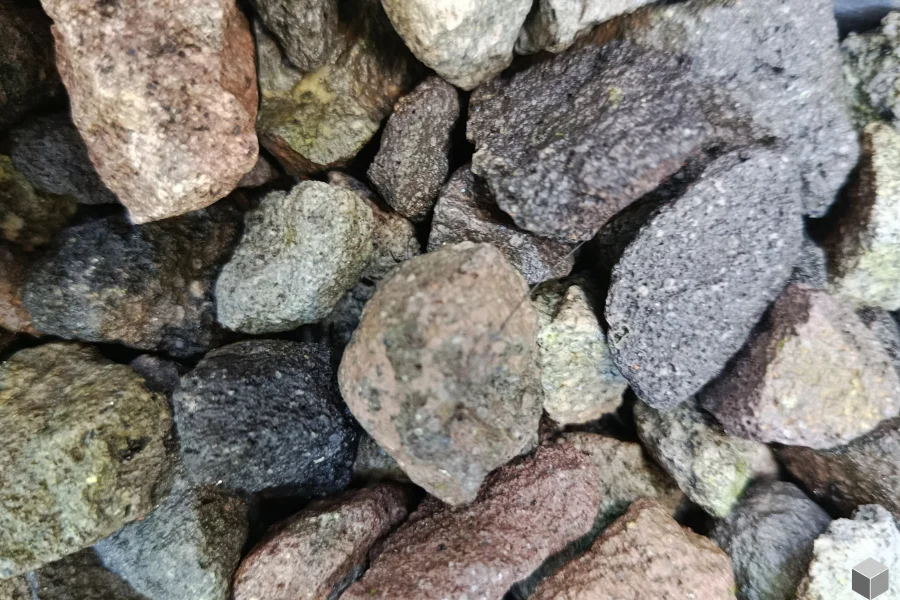
#57 gravel consists of angular stones ranging from ½ inch to 1 inch (approximately 12–25 mm) in diameter. The name refers to the sieve size used during processing rather than any specific measurement.
The angular shape of #57 stone allows it to lock in place under load, while its relatively small size means it can be moved or rearranged when necessary. It is most commonly made from limestone, granite, or trap rock, with limestone being by far the most widely used material in the US.
Is 3/4 and #57 Gravel the Same?
Not exactly. #57 gravel and 3/4-inch gravel are often used interchangeably in conversation, but there’s a subtle difference. 3/4-inch gravel is named for its maximum stone diameter. #57 gravel is a gradation specification — it spans ½ inch to 1 inch, meaning the average piece is roughly 3/4 inch but the range is wider. In practice, many suppliers sell them as equivalent products, and for most homeowner applications the distinction doesn’t matter.
How to Calculate #57 Gravel: Step by Step
Our 57 gravel calculator uses this formula:
Volume (cu ft) = Length (ft) × Width (ft) × Depth (ft)
Tons = Volume (cu ft) × 1.4 ÷ 27
(#57 stone weighs approximately 1.4 tons per cubic yard, or about 2,800 lbs/yd³)
Example Calculation
You have a driveway that is 40 feet long, 12 feet wide, and you want 4 inches of gravel depth.
- Convert depth to feet: 4 ÷ 12 = 0.333 ft
- Volume: 40 × 12 × 0.333 = 160 cubic feet
- Convert to cubic yards: 160 ÷ 27 = 5.93 cu yd
- Convert to tons: 5.93 × 1.4 = 8.3 tons
Round up to 9 tons to account for settling and uneven ground. Our 57 gravel calculator does this automatically.
#57 Stone Coverage Table: Square Feet Per Ton
Use this table to quickly estimate how much 57 stone you need by area and depth.
| Depth | Coverage Per Ton (sq ft) | Coverage Per Cubic Yard (sq ft) |
|---|---|---|
| 2 inches | 160 sq ft | 162 sq ft |
| 3 inches | 108 sq ft | 108 sq ft |
| 4 inches | 80 sq ft | 81 sq ft |
| 6 inches | 54 sq ft | 54 sq ft |
| 8 inches | 40 sq ft | 40 sq ft |
| 12 inches | 27 sq ft | 27 sq ft |
These figures are based on the standard #57 gravel density of approximately 1,600 kg/m³ (100 lb/cu ft). Actual coverage may vary slightly depending on whether you’re using #57 limestone, #57 granite, or #57 washed gravel, as density differs slightly between rock types.
#57 Gravel Calculator: Cubic Yards to Tons Conversion
If your supplier quotes by the cubic yard and you want to verify tons — or vice versa — use these conversions:
| Unit | #57 Limestone | #57 Granite |
|---|---|---|
| 1 cubic yard | ~1.35 tons | ~1.45 tons |
| 1 ton | ~0.74 cu yd | ~0.69 cu yd |
| 1 cubic foot | ~100 lbs | ~107 lbs |
Quick formula:
- Cubic yards × 1.4 = approximate tons (#57 average)
- Tons × 0.714 = approximate cubic yards
What Is #57 Gravel Good For?
#57 stone is prized for its versatility and excellent drainage, making it effective at preventing flooding and pooling in landscaping and around structures. It is also heavy enough to serve as a base for driveways and asphalt roads, and is widely used to surface unpaved gravel roads on flat terrain.
Here’s a project-by-project breakdown with recommended depth:
| Project | Recommended Depth | Notes |
|---|---|---|
| Driveway base | 4–6 inches | Standard for residential driveways |
| French drain / trench | 6–12 inches | Surrounds perforated pipe |
| Concrete slab sub-base | 4–8 inches | Reduces cracking, improves drainage |
| Walkway / path | 2–3 inches | Decorative and functional |
| Shed or deck base | 3–4 inches | Prevents mud and moisture |
| Retaining wall backfill | Varies | Relieves hydrostatic pressure |
| Pipe bedding | 6 inches min | Utilities, sewer lines |
| Landscape beds | 2–3 inches | Weed suppression, drainage |
How Thick Should a Layer of #57 Gravel Be?
The right depth depends on the application:
For driveways, 4 inches is the minimum and 6 inches is standard for regular vehicle traffic. Heavy trucks or equipment pads call for 8 inches or more.
For drainage applications like French drains and pier holes, 6–12 inches is typical to ensure sufficient water movement around the pipe or structure.
For decorative or landscape use, 2–3 inches is sufficient to suppress weeds and provide a clean appearance without excessive cost.
Does #57 Gravel Need to Be Compacted?
This is one of the most frequently misunderstood points about #57 stone. Because it consists entirely of uniformly sized angular pieces with no fine particles (no sand or dust), #57 gravel drains well while still locking together for structural support — but it does not compact the same way crusher run or road base material does.
For drainage applications, do not compact. Compaction closes the void spaces that allow water to flow through.
For driveways and structural bases, light compaction with a plate compactor helps the stones interlock without eliminating drainage. Do not use a heavy vibratory roller, which can crush the aggregate and destroy the drainage properties.
For concrete sub-base, compact to a firm, stable surface before pouring.
#57 Limestone Price Per Ton (2025–2026)
#57 limestone typically ranges from $35 to $50 per ton, while regional variations — especially in northern states — can push prices to $40–$80 per ton due to transportation costs.
| Supply Method | Estimated Cost |
|---|---|
| Pick-up at quarry | $35–$50 per ton |
| Local delivery (under 10 miles) | $50–$80 per ton |
| Bulk delivery (20+ tons) | $30–$45 per ton (discounted) |
| Bagged at home improvement stores | $5–$8 per 50 lb bag |
Buying in off-peak seasons — late fall through early spring — can save 10–20%. Purchasing in bulk quantities of 20 or more tons typically yields $5–$10 per ton in discounts.
To find 57 limestone near you, search for local quarries, stone yards, or landscape supply companies. Sourcing within 50 miles of your project significantly reduces delivery costs.
How Much Does 5 Tons of #57 Gravel Cover?
Using the standard coverage rate of approximately 80 sq ft per ton at 4-inch depth:
- 5 tons at 2-inch depth = ~800 sq ft
- 5 tons at 3-inch depth = ~540 sq ft
- 5 tons at 4-inch depth = ~400 sq ft
- 5 tons at 6-inch depth = ~270 sq ft
A standard single-car driveway (10 ft × 50 ft = 500 sq ft) at 4-inch depth requires roughly 6.25 tons of #57 stone. Order 7 tons to account for settling.
#57 Gravel vs. Other Stone Sizes: Quick Comparison
| Stone Size | Diameter | Best Use |
|---|---|---|
| #1 & #2 limestone | 2–4 inches | Erosion control, large drainage |
| #57 limestone/granite | ½–1 inch | Driveways, drainage, concrete base |
| #67 gravel | ¾ inch | Concrete aggregate, fine drainage |
| #8 gravel | ⅜–½ inch | Pathways, under slabs |
| #9 / pea gravel | ¼–⅜ inch | Decorative, playgrounds |
| Crusher run (#304) | Mixed with fines | Compacted base, road building |
#57 sits in the middle of the sizing range — coarser than pea gravel, finer than riprap — which explains its versatility across so many project types.
Frequently Asked Questions
What size is #57 gravel?
#57 gravel measures ½ inch to 1 inch in diameter. The “#57” designation refers to the ASTM sieve classification used during processing, not a measurement in inches.
Is 3/4 and #57 gravel the same?
They are very similar and often interchangeable at the supplier level. 3/4-inch gravel specifies the maximum stone size, while #57 is a gradation range from ½ to 1 inch. For most residential projects — driveways, French drains, and concrete bases — they perform identically.
What is #57 gravel good for?
#57 gravel excels in driveways, French drains, concrete slab sub-bases, pipe bedding, retaining wall backfill, and decorative landscaping. Its angular shape interlocks for stability while its lack of fine particles allows water to drain freely — making it one of the most versatile construction aggregates available.
How thick should a layer of #57 gravel be?
For driveways, use 4–6 inches. For French drains and drainage trenches, 6–12 inches is standard. For decorative walkways and landscaping beds, 2–3 inches is sufficient. For concrete sub-bases, follow your local building code — typically 4–6 inches.
Does #57 gravel need to be compacted?
For drainage applications, no — compaction fills the voids and defeats the purpose. For driveways and structural base layers, light compaction helps the angular stones interlock. Avoid heavy compaction, which can crush the aggregate and impair drainage.
How much does 5 ton of #57 gravel cover?
At 4-inch depth, 5 tons of #57 gravel covers approximately 400 square feet. At 2-inch depth, the same 5 tons covers around 800 square feet. Use our 57 gravel calculator above to get an exact figure for your specific dimensions and depth.
Tips to Get the Best Price on #57 Stone
Buy direct from a quarry when ordering 5 tons or more. You’ll pay materially less per ton than going through a landscape supply middleman.
Order in off-peak months. Late fall and winter orders often carry lower rates and better delivery availability.
Coordinate with neighbors. Splitting a full truck delivery (typically 15–20 tons) between two properties can reduce your per-ton cost significantly.
Compare by delivered cost, not just sticker price. A quarry offering $35/ton but charging $100 for delivery may cost more than a supplier at $45/ton with free local delivery.
Use our #57 gravel calculator at the top of this page to get your exact tonnage, then take that number to at least two local suppliers for a quote.